
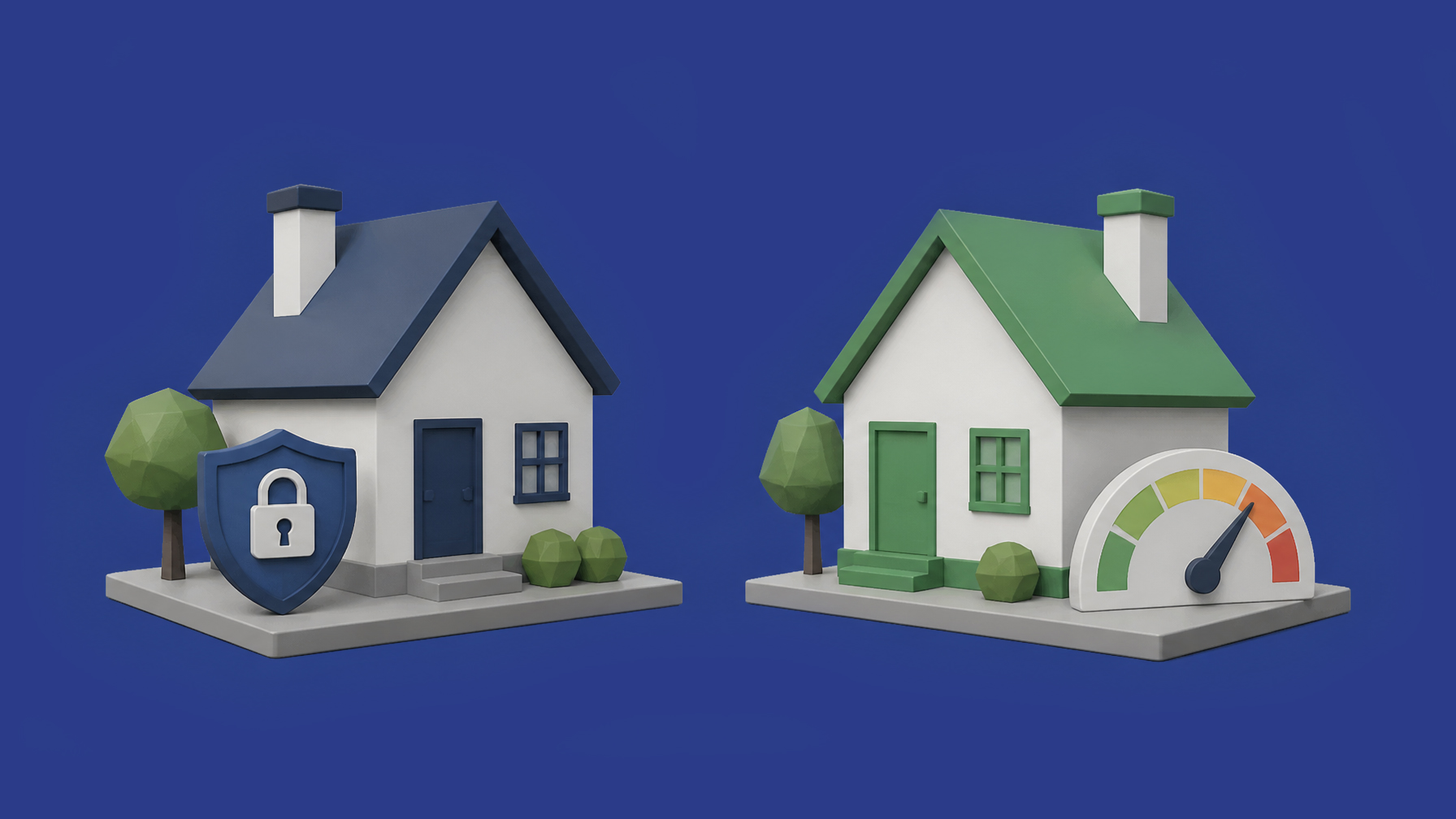
Choosing between a fixed rate and a tracker is really a choice about what you want to be true for the next few years: a payment that never moves, or a payment that follows the Bank of England and could fall as easily as it rises.
Neither is the "right" answer on its own. The right answer depends on your budget, your plans and how much uncertainty you are comfortable carrying.
What a fixed rate does
A fixed rate locks your interest rate for a set period, usually two or five years, sometimes ten. Whatever happens to the wider market in that window, your monthly payment stays exactly the same.
That is why fixed rates remain the most popular choice by a distance. If your budget is tight, or you simply want to know the number that leaves your account on the same day each month, a fix does one job and does it well. The trade-off is that if rates fall, you stay where you are until the deal ends.
What a tracker does
A tracker follows the Bank of England Bank Rate plus a set margin. If the Bank Rate is 3.75% and your tracker is Bank Rate plus 0.75%, you pay 4.5%. When the Bank moves, your rate moves with it, usually from the following month.
For context, the Bank held Bank Rate at 3.75% on 30 July 2026, the fifth hold in a row, with CPI inflation at 2.6% in the year to June. Rates change, so treat that as a snapshot rather than a forecast: the point of a tracker is that you are accepting movement in both directions.
A fix buys certainty and you pay a little for it. A tracker keeps the upside if rates fall, and hands you the risk if they do not.
Questions worth answering before you choose
In our experience these five answers point most people to the right product quite quickly:
- If your payment went up by £150 a month, would that be an inconvenience or a genuine problem?
- Do you expect to move, or need to sell, within the next two to five years?
- Are you likely to come into a lump sum you would want to overpay with?
- Is your income steady, or does it vary month to month?
- How much is the certainty of a fixed payment actually worth to you?
If the first answer is "a genuine problem", a fixed rate is usually the sensible starting point regardless of what anyone predicts about rates.
Early repayment charges and how long to fix
Most fixed deals carry an early repayment charge if you leave before the end of the term, often a percentage of the balance that steps down each year. Fixing for five years when you suspect you will move in two can turn out expensive, so the length of the fix should match your plans, not just the rate on the page.
Many trackers come with no early repayment charge at all, which is one reason people use them as a short bridge when they expect their circumstances to change.
What happens when your deal ends
When a fixed or tracker deal finishes, you roll onto the lender's standard variable rate, which is almost always the most expensive rate they offer. This is where a surprising number of homeowners in Cardiff quietly lose money each month without realising anything has changed.
Start looking around six months before your deal ends. A new rate can usually be secured in advance, and if rates improve before completion, it can often be swapped for the better one.
Talk it through with an adviser in Cardiff
Every case is different, and fixing versus tracking is one of those decisions where a half-hour conversation saves months of second-guessing. Our advisers work across Cardiff and South Wales, search the whole market, and never charge you a fee: we are paid by the lender, not by you. We can often have an Agreement in Principle arranged within 24 hours of speaking to you.
Call 0800 069 9110, 7 days a week, or send us a message and we will call you back at a time that suits.
This article is general information, not advice for your circumstances. Your home may be repossessed if you do not keep up repayments on your mortgage. Speak to an adviser about what is right for you.
Ready to talk it through?
Fee-free, whole-of-market mortgage advice for Cardiff and South Wales, 7 days a week.


